Solar System

Key facts
| Age | About 4.6 billion years |
|---|---|
| Share of total mass in the Sun | About 99.8 percent |
| Planets | 8 (4 rocky, 4 giants) |
| Recognized dwarf planets | 5 (Ceres, Pluto, Haumea, Makemake, Eris) |
| Neptune's distance from the Sun | About 2.8 billion miles (30 AU) |
| Kuiper Belt | About 30 to 50 AU from the Sun |
| Oort Cloud (estimated) | From about 2,000 to 100,000 AU or more |
| Pluto reclassified | 2006, by the International Astronomical Union |
In short
- The Sun holds about 99.8 percent of all the mass in the Solar System.
- Four small rocky planets orbit close in; four giant planets orbit farther out.
- Pluto became a dwarf planet in 2006, alongside Ceres, Eris, Haumea and Makemake.
- Beyond Neptune lies the icy Kuiper Belt, and far beyond that the Oort Cloud, a source of long-period comets.
- Everything formed about 4.6 billion years ago from a collapsing cloud of gas and dust.
The Sun at the center
The Solar System is the Sun and everything held in orbit by its gravity: planets, moons, dwarf planets, asteroids, comets, dust and gas.
The Sun is an ordinary middle-aged star, a huge ball of mostly hydrogen and helium. In its core, hydrogen nuclei fuse into helium, which releases the energy that lights and warms the planets. It holds about 99.8 percent of all the mass in the system, so in a sense everything else is a thin scattering of leftovers.
Four rocky planets
The four inner planets are Mercury, Venus, Earth and Mars. They are called terrestrial planets, which simply means Earth-like: small, dense worlds with solid rocky surfaces and metal cores.
Mercury is the smallest and closest to the Sun. Venus is wrapped in thick clouds that trap heat, making it the hottest planet. Earth is the only world known to have liquid water oceans on its surface and life. Mars is a cold desert with the largest volcano known in the Solar System, Olympus Mons.
Four giant planets
Past Mars orbit the four giants. Jupiter and Saturn are gas giants, made mostly of hydrogen and helium with no solid surface to stand on. Jupiter is so large that more than 1,300 Earths could fit inside it.
Uranus and Neptune are called ice giants. Planetary scientists use ice here to mean water, methane and ammonia, which make up much of their interiors. All four giants have rings, though Saturn's are by far the brightest, and all have large families of moons.
Dwarf planets and Pluto's new label
In 2006 the International Astronomical Union, the body that names and classifies objects in space, set out what counts as a planet. A planet must orbit the Sun, be massive enough to pull itself into a round shape, and have cleared its orbital neighborhood of other similar-sized objects.
Pluto meets the first two rules but shares its zone with many other icy bodies, so it was placed in a new category: dwarf planet. The decision was partly triggered by the discovery of Eris, a distant world about as large as Pluto.
Five dwarf planets are officially recognized today: Ceres in the asteroid belt, plus Pluto, Haumea, Makemake and Eris farther out. Astronomers think many more are waiting in the outer Solar System.
Belts and clouds of small bodies
Between Mars and Jupiter lies the main asteroid belt, a broad ring of rocky and metallic fragments. Movies often show it crowded, but it is mostly empty space. Spacecraft cross it without trouble, and the total mass of the belt is only a few percent of our Moon's.
Beyond Neptune, roughly 30 to 50 AU from the Sun, is the Kuiper Belt. One AU, or astronomical unit, is the average Earth to Sun distance, about 93 million miles. The Kuiper Belt is a doughnut-shaped region of icy bodies, and Pluto is one of its largest members. NASA's New Horizons spacecraft flew past Pluto in 2015 and later past a smaller Kuiper Belt object called Arrokoth.
Much farther out, the Oort Cloud is thought to surround the Solar System like a thick shell. It may begin around 2,000 AU and stretch to 100,000 AU or more. No one has seen it directly. Its existence is inferred from comets that fall inward on very long orbits, some taking thousands of years or more for one trip around the Sun.
A sense of scale
Pictures in books squeeze the planets close together, which hides how empty the Solar System is. A scale model helps.
Shrink the Sun to the size of a beach ball about 2 feet across. Earth becomes a peppercorn about 230 feet away. Jupiter is a large grape about a quarter mile away, and Neptune is a small marble well over a mile from the beach ball. On the same scale, the nearest star would be thousands of miles away. Many towns have built walkable scale models like this, and walking one makes the distances feel real.
How it all formed
About 4.6 billion years ago, a cloud of gas and dust in our galaxy began to collapse, possibly nudged by a nearby exploding star. As it shrank, it spun faster and flattened into a disk, with most of the material falling into the center to become the Sun.
In the disk, dust grains stuck together into pebbles, then boulders, then bodies miles wide. Close to the young Sun it was too hot for ice to survive, so only rock and metal could build planets, which is why the inner planets are small and rocky. Farther out, ice was plentiful, cores grew large quickly and pulled in huge amounts of gas, forming the giants.
The asteroids, Kuiper Belt objects and comets are leftover building blocks. That is why scientists study them so closely: they preserve material from the Solar System's earliest days.
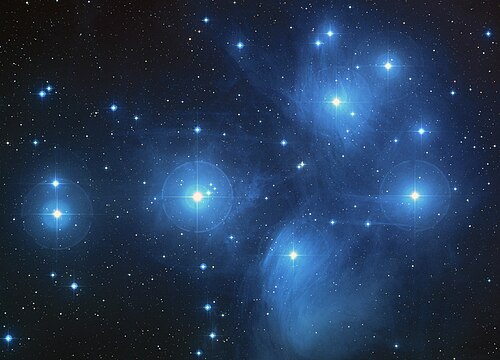 What are stars?Giant balls of hot gas powered by nuclear fusion, from red dwarfs to blue giants.
 GalaxiesVast islands of stars, gas and dark matter, including our own Milky Way.
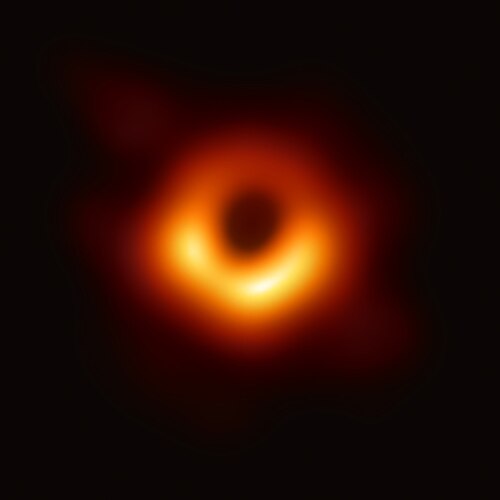 Black holesPlaces where gravity is so strong that not even light can escape.
