Meteors, meteor showers and meteorites
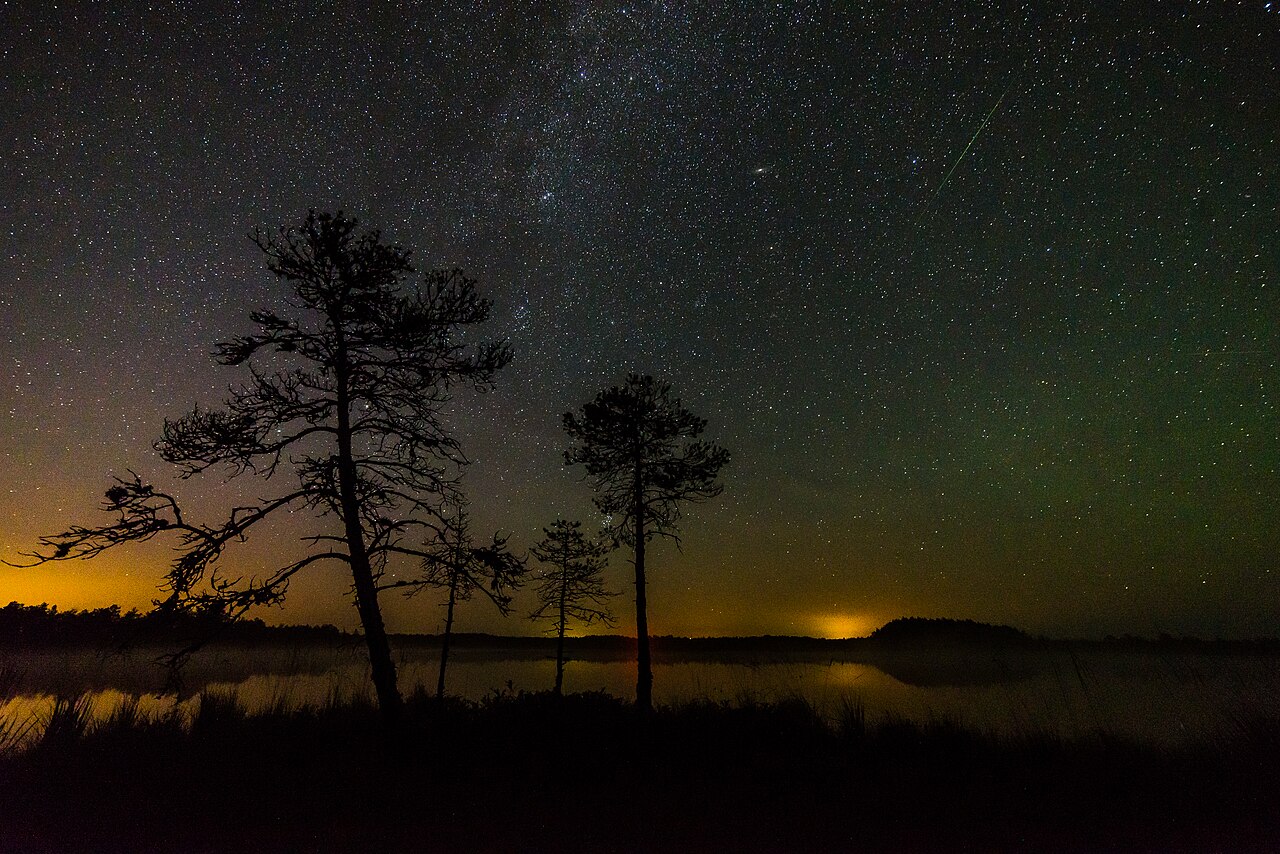
Key facts
| Meteoroid | A rock or dust grain moving through space |
|---|---|
| Meteor | The streak of light as it burns up in the air |
| Meteorite | A piece that survives and reaches the ground |
| Entry speed | About 25,000 to 160,000 mph |
| Burn-up height | Usually about 50 to 75 miles up |
| Typical meteoroid size | A grain of sand to a pebble |
| Strongest showers | Quadrantids, Perseids, Geminids |
| Equipment needed | None: your eyes, a dark sky and patience |
| Best time of night | After midnight, before dawn |
In short
- A meteoroid is a space rock, a meteor is the flash it makes in the air, and a meteorite is whatever lands on the ground.
- Most meteors come from grains no bigger than a pea, burning up about 50 to 75 miles above us.
- Meteor showers happen when Earth passes through dust left by a comet or asteroid, so they return on the same dates each year.
- The Perseids in August and the Geminids in December are the most reliable showers for most people.
- You need no telescope: a dark sky, a wide view, warm clothes and at least an hour of patience.
Meteoroid, meteor, meteorite
These three words describe one object at different stages. A meteoroid is a small piece of rock or metal drifting through space, usually broken off a comet or asteroid. Most are the size of a sand grain; anything much larger than about 3 feet is generally called an asteroid.
When a meteoroid plunges into Earth's atmosphere, it heats the air in front of it so much that the air glows. That bright streak is a meteor, often called a shooting star, even though it has nothing to do with stars. If part of the object survives the fall and lands, that piece is a meteorite.
Scientists estimate that tens of tons of space dust and small rocks hit Earth every day. Nearly all of it burns up or falls as fine dust, unnoticed.
Why meteors glow
Meteoroids hit the atmosphere at about 25,000 to 160,000 mph. At those speeds the air ahead of them is squeezed and heated to thousands of degrees, and the meteoroid's surface vaporizes. The glowing trail is mostly hot, glowing air and vapor, not a burning rock.
Most meteors appear about 50 to 75 miles up and last under a second. A very bright meteor, brighter than Venus, is called a fireball. A fireball that explodes in the air is called a bolide. Some leave a faint glowing trail, called a train, that lingers for a few seconds.
Meteorites on the ground
Meteorites come in three main kinds: stony meteorites, the most common; iron meteorites, made mostly of iron and nickel; and stony-iron meteorites, a mix of both. Most come from asteroids, but a few are known to come from the Moon and Mars, blasted off by ancient impacts.
Meteorites are valuable to science because many are older than any rock on Earth's surface, about 4.6 billion years old. Freshly fallen ones are usually covered with a thin, dark fusion crust formed during their fiery entry. If you think you have found one, a local university or natural history museum can help identify it.
Why meteor showers happen
As a comet travels near the Sun, it sheds dust and small grains along its orbit. Over many trips, this debris spreads into a long, thin stream. When Earth's orbit crosses that stream, we plow through the dust and see many more meteors than usual. Because Earth reaches the same point in its orbit on about the same date each year, showers return on a regular calendar.
All the meteors in a shower move on parallel paths, but perspective makes them seem to spread out from one spot in the sky, called the radiant. A shower is named after the constellation that holds its radiant: the Perseids appear to come from Perseus, the Leonids from Leo. You do not need to look at the radiant itself; meteors can show up anywhere in the sky.
Shower strength is often given as a zenithal hourly rate, the number of meteors one observer would see per hour under a perfectly dark sky with the radiant overhead. Real counts are usually lower.
The main annual showers
Quadrantids: peak around January 3–4, up to about 100 meteors an hour, but the peak lasts only a few hours. The parent is thought to be asteroid 2003 EH1.
Lyrids: peak around April 22–23, about 15 to 20 an hour, from comet Thatcher. Eta Aquariids: peak around May 5–6, from Halley's Comet, best seen from the Southern Hemisphere and before dawn.
Perseids: peak around August 12–13, about 100 an hour from comet Swift-Tuttle, often with bright fireballs and warm summer nights. Orionids: peak around October 21–22, about 20 an hour, also from Halley's dust.
Leonids: peak around November 17–18, usually about 15 an hour from comet Tempel-Tuttle, though they have produced rare storms of thousands per hour. Geminids: peak around December 13–14, up to about 120 to 150 an hour, from asteroid 3200 Phaethon; for many observers this is the best shower of the year. Exact peak times shift slightly each year, so check a current calendar.
How to watch a meteor shower
You do not need a telescope or binoculars; they show too little sky. Your eyes are the right tool. Find the darkest place you can reach, away from streetlights, with a wide view of the sky. Check the Moon: a bright Moon near full washes out all but the brightest meteors.
Most showers are best after midnight and before dawn, when your side of Earth faces forward into the debris stream. Lie back on a reclining chair or blanket and look about halfway up the sky, a little away from the radiant.
Give your eyes 20 to 30 minutes to adjust to the dark and avoid looking at your phone screen. Dress warmly, even in summer, and plan to watch for at least an hour. Meteors often come in bursts with quiet gaps between them, so patience is the main skill. To photograph them, use a camera on a tripod with a wide-angle lens and take many long exposures in a row.
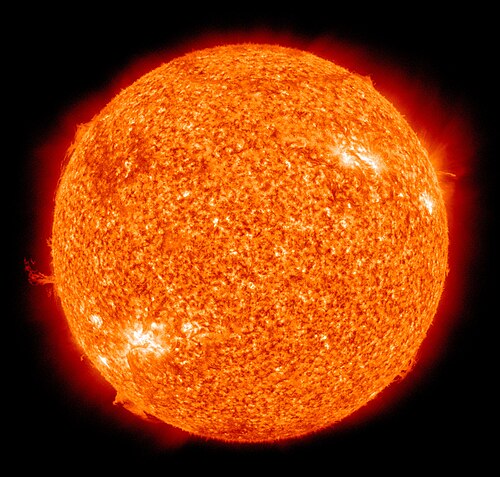 The SunOur home star: a nuclear furnace that lights, warms and shapes the whole Solar System.
 The MoonEarth's rocky companion, born from a giant impact and covered in craters and lava plains.
 Dwarf planets and PlutoRound worlds too small to clear their orbits: Pluto, Ceres, Eris, Haumea and Makemake.
